Chilaw Lagoon
Your journey begins at Chilaw Lagoon, about 80km north of Colombo. The lagoon stretches nearly 30km in length, reaching a width of 2km at its broadest point, and is home to a wide variety of fish including catfish, sardines, snappers and seabass — around 20 species of fish, prawns and crabs of commercial importance to the country. Sri Lanka recognises Chilaw Lagoon as a major source of livelihood for more than a thousand families living within its settlements, and is working to conserve its environment while supporting the sustainable development of its fisheries. Fringed by mangrove forests and marshland, the lagoon's ecosystems protect the coast from erosion and storm surges, and shelter young fish that would struggle to survive outside the safety of its confines. The area hosts the most species-diverse mangrove forests along Sri Lanka's western coast, with around 16 different mangrove species attached to the lagoon and surrounding wetlands.
Dolphin and Whale Watching
Kalpitiya is the country's premier dolphin and whale watching destination on the west coast, about an hour and a half from Chilaw. The season runs from mid-October until the end of March, when the sea is at its calmest and the warm waters attract migratory whales. Blue whales and sperm whales are the most commonly sighted species. Boats set out early, bringing you within a few feet of these magnificent creatures for a genuinely once-in-a-lifetime experience.
Wilpattu National Park
Sri Lanka's largest — and one of its oldest — national parks is only a two-hour drive from Chilaw, making for a great half-day excursion. Your hotel can help arrange the safari jeep and a naturalist guide. Wilpattu thrives with endemic flora and fauna and is a popular place to spot leopards and deer — though loud noises will scare the animals away, so save the karaoke for the drive back.
Munneswaram Temple
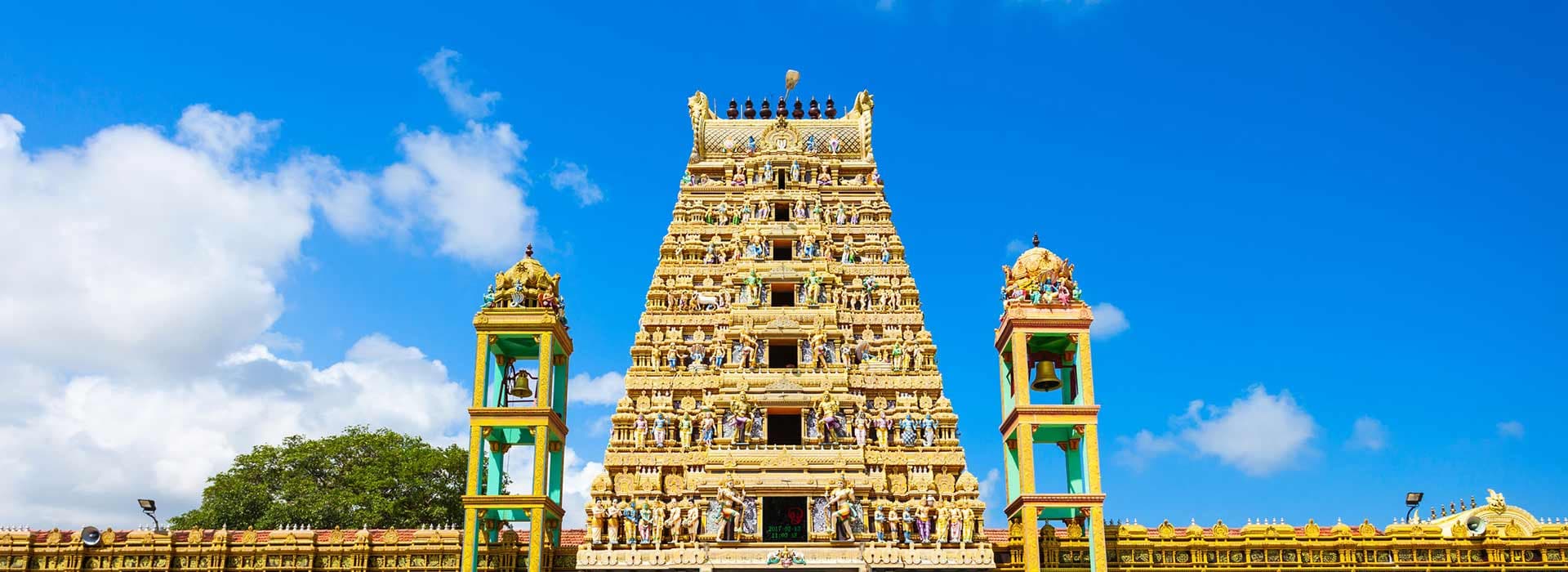
One of the island's oldest Hindu temples, with roots dating to 1000 CE, Munneswaram Temple is one of five ancient shrines dedicated to Lord Shiva and is visited by people of all faiths. A highlight in its calendar is the Maha Shivratri Festival, a nine-day religious event held in August. Legend connects the temple to the Ramayana: after killing King Ravana — a Brahmin, a sacred title in Hinduism — Rama is said to have committed a major sin and turned to prayer at Munneswaram to repent. The temple complex is one of the Pancha Ishwarams, a group of five ancient Hindu kovils dedicated to Shiva dotted around Sri Lanka's coast, and contains five different temples, one of which is honoured by Buddhist worshippers too. In 1578 the temple was destroyed by the Portuguese, with only its basement left standing; locals managed to save some of its idols before the destruction, and it was rebuilt by a Sri Lankan king before being destroyed again by the Portuguese in the early 17th century and rebuilt once more by the local community. Before visiting, ensure shoulders and knees are covered and footwear is left at the entrance.
Madhu Church
Madhu Church is a 400-year-old Roman Catholic church and one of the few in the country to have gained Papal recognition. Many Sri Lankan Catholics make the pilgrimage to this church at least once a year, especially in August for the Feast of Madhu — if you're not a fan of crowds, it's best to avoid the church during the feast itself.
Muthurajawela Marsh
The name Muthurajawela translates to 'Swamp of Royal Treasure', and this marshland lives up to its evocative name. A boat safari along its murky waters brings you face to face with exciting wildlife such as birds, monitor lizards, crocodiles and even pythons.
Rama's Bridge (Adam's Bridge)
The story of Rama's journey to Sri Lanka begins with the kidnapping of his wife, Sita, by the demon king Ravana, who carried her by airborne chariot to the island of Lanka. According to Hindu legend, an army of warrior monkeys built a bridge between India and Sri Lanka to allow Rama to cross and pursue Ravana. The remains of this bridge can still be seen today, extending from Mannar Island in the north of Sri Lanka to Pamban Island in India's south — a chain of disconnected limestone shoals and sandbanks covering roughly 48km. It's also known as Adam's Bridge, from early Islamic sources claiming Adam crossed to India from here after falling to earth at Adam's Peak.
Ravana Cave and Ravana Falls
After kidnapping Sita, King Ravana is said to have hidden her in the caves behind Ravana Falls, once shrouded by thick jungle that would easily have hidden the waterfall and cave from prying eyes. Located in the Ravana Ella Wildlife Sanctuary in Ella, the cave entrance lies around five kilometres from the falls, though the two are said to be connected, with the cave sitting more than a thousand metres above sea level. Ravana Falls reaches a height of 25m and is known as the widest waterfall in Sri Lanka; legend holds that Sita bathed in the pool gathered by these falls during her confinement. The best time to visit is between June and November during the rainy season, when the waters gush over the rocks in stunning form — though the rocks can be slippery, so take care when swimming.
The Sri Munneswaram Devasthanam Temple
Located in the village of Munneswaram, a nine-minute drive from Chilaw town, this temple complex dedicated to Lord Shiva is considered the oldest Hindu temple in Sri Lanka and is said to be the site where Rama prayed to Lord Shiva for guidance after killing Ravana.
Anawilundawa Wetland Sanctuary
Located in Puttalam, a 30-minute drive north of the Munneswaram temple, Anawilundawa Wetland Sanctuary is one of six Ramsar Sites in Sri Lanka — a wetland of international importance. Spanning nearly 1,400 hectares, it combines forest wetlands (mangrove and freshwater swamps), saltwater coastal ecosystems and freshwater lakes, creating unique nesting and breeding grounds for more than 150 bird species. The sanctuary is also home to around 20 mammal species, 70 butterfly species and more than half of Sri Lanka's freshwater fish species. Plan a visit between October and April, when rarer migratory birds arrive; birdwatching tours, hiking expeditions and boat-ride adventures can all be arranged.