Ceylon Tours
Powered by Aslatis
Sigiriya, Sri Lanka
← All destinationsCultural Triangle

Sigiriya

The rock fortress that outstared an empire

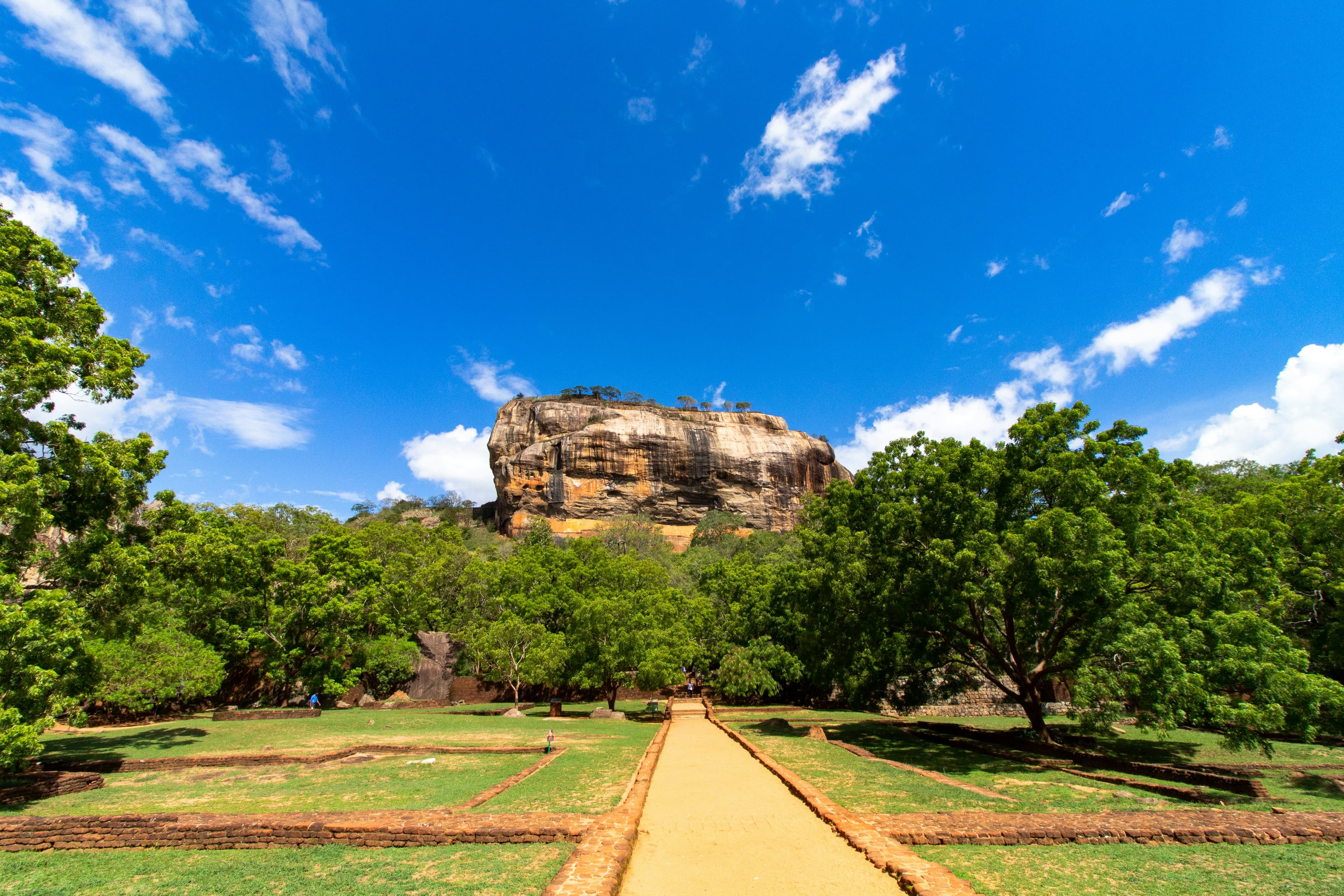
Rising dramatically from the central plains, the enigmatic rocky outcrop of Sigiriya is perhaps Sri Lanka’s single most dramatic sight. Near-vertical walls soar to a flat-topped summit that contains the ruins of an ancient civilization, thought to once have been the epicenter of the short-lived kingdom of Kassapa, with spellbinding vistas across mist-wrapped forests in the early morning. Sigiriya refuses to reveal its secrets easily, and you’ll have to climb a series of vertiginous staircases attached to sheer walls to reach the top. On the way you’ll pass a series of remarkable frescoes and a pair of colossal lion’s paws carved into the bedrock. The surrounding landscape – lily-pad-covered moats, water gardens and cave shrines – only add to Sigiriya’s rock-star appeal.

Discover

Places to Explore in Sigiriya

Discover the historic landmarks, cultural attractions and hidden gems that make Sigiriya special.

Royal Gardens

The base of the Sigiriya rock is a beautifully landscaped area dotted with formal water features, terraced gardens and natural boulders that were once home to numerous Buddhist shrines. From the main entrance you pass a series of symmetrical water gardens extending to the foot of the rock, including bathing pools, little islands with pavilions and landscaped borders. The boulder gardens closer to the rock feature boulders that once formed the bases of monastery buildings.
Lion’s Paws

At the northern end of the rock, a narrow pathway emerges onto the large platform from which the site derives its name – Sigiriya means Lion Rock. The enormous lion paws were found during archaeological excavations in 1898. At one time a gigantic brick lion sat at this end of the rock, with the final ascent beginning between its paws and leading into its mouth. Today the paws and first steps remain, followed by metal stairs leading toward the summit.

Pidurangula

This prominent rock about 1km north of the Sigiriya site offers amazing views of Sigiriya from its wide summit. The hike takes around 20 minutes and passes several small temples, a reclining Buddha and a final scramble over boulders. Sunrise and sunset are particularly beautiful from the top.

Frescoes

Halfway up Sigiriya, an open-air spiral stairway leads to a sheltered gallery in the sheer rock face. The famous paintings of the buxom, wasp-waisted women are popularly believed to represent apsaras or King Kasyapa’s concubines. Protected from the sun, the frescoes remain remarkably well preserved and their colours still glow.

Sigiriya Museum

This museum provides an excellent overview of the archaeological site and explains Sigiriya’s cultural importance. Exhibits explore the ancient settlement, trade routes and the site's connections with India, China, the Gulf and the Roman Empire. The museum is located near the main ticket booth.

Cobra Hood Cave

This rocky projection in the Boulder Garden earned its name because its overhang resembles an opened cobra’s hood. The plastered interior was once decorated with floral and animal paintings, traces of which remain. An inscription dating to the 2nd century BC indicates that the cave was donated to a monk.

Dakinigiriya Vihara

This little-visited ruined monastery can be reached by bicycle. Trails pass a stupa, standing monolithic stones, rock inscriptions and caves, a small tank and peaceful wooded areas often inhabited by monkeys.